Honest, useful guides
Trustwallet security is private-key control for Trust Wallet self-custody
Trustwallet security is the protection model around Trust Wallet's self-custody wallet: the app gives users control of private keys, recovery phrases, on-chain approvals, and Web3 signatures across crypto assets, NFTs, DeFi, and SWIFT smart wallet flows. Its strongest security feature is ownership. The same feature also puts real responsibility on the user, because blockchain transfers, token approvals, and seed phrase exposure settle directly on public networks.
Self-custody starts with the recovery phrase
Trust Wallet is built as a self-custody wallet, so the private keys belong to the wallet holder rather than a centralized account provider. When a standard wallet is created, the recovery phrase is the master backup that restores access. A BIP39 phrase uses 12, 15, 18, 21, or 24 words; Trust Wallet users most commonly encounter a 12-word or 24-word backup depending on the wallet type and import path.
This is the core of Trustwallet security because anyone who obtains the recovery phrase controls the wallet. The phrase should live offline, written or stored in a durable backup location, with no screenshots, cloud notes, email drafts, browser autofill, or chat messages. A password, face unlock, or phone PIN protects local app access, but the recovery phrase remains the deeper control layer.
How SWIFT smart wallet changes the key experience
SWIFT is Trust Wallet's smart contract wallet option, designed around account abstraction. Instead of using only a traditional externally owned account, a smart wallet uses contract-based account logic to make Web3 actions easier to manage. The goal is a smoother path through signing, paying gas, and interacting with decentralized applications while keeping assets in self-custody.
That matters for security because account abstraction shifts part of the user experience away from raw key handling and toward programmable wallet behavior. Smart wallets support patterns such as streamlined approvals and simplified transaction flows. They still require serious attention: a smart wallet transaction remains an on-chain action, and the user still needs to understand what is being signed before approving it.
What the mobile app and browser extension protect
Trust Wallet runs as a mobile app and a browser extension, covering phones and desktop browsing sessions. Local app locks, device-level biometrics, passcodes, and operating system protections help limit casual access if a device is borrowed, misplaced, or opened by someone else. These protections are useful, but they sit above the blockchain control layer.
On desktop, browser extensions face a different threat surface. Malicious extensions, fake pop-ups, and copied websites target wallet signatures rather than exchange passwords. Trustwallet security therefore includes basic browser hygiene: keep the extension list lean, inspect the site requesting a connection, and close old wallet connections after finishing a Web3 session.
Multi-chain assets create multi-chain responsibilities
Trust Wallet supports a broad set of crypto assets across many networks, including Bitcoin, Ethereum, BNB Smart Chain, Solana, Polygon, Tron, and other major ecosystems. The benefit is practical: one wallet view reaches tokens, NFTs, swaps, staking, market data, and decentralized applications across chains. The responsibility is also practical: every chain has its own addresses, fees, explorers, token standards, and approval behavior.
Sending USDT on Tron is not the same transaction environment as sending an ERC-20 token on Ethereum or a BEP-20 token on BNB Smart Chain. Network selection, gas tokens, and recipient addresses deserve full attention before a transfer. Trustwallet security improves when the user treats each network as its own rail, with its own fee asset and confirmation rules.
Token approvals are the quiet risk in DeFi
Many DeFi interactions require a token approval before a swap, farm, bridge, marketplace listing, or contract deposit. An approval gives a smart contract permission to move a specific token from the wallet. Some approvals are limited; others grant a broad allowance. If the contract is malicious or later exploited, that approval becomes a route to drain the approved token.
A good wallet habit is to review approvals after using unfamiliar decentralized applications. Revoke permissions that no longer serve an active purpose, especially for stablecoins such as USDT or USDC and widely held assets such as ETH, BNB, SOL, or POL. This is one of the most concrete parts of Trustwallet security because it reduces live permissions without moving the underlying funds.
Phishing, malware, and address substitution
The most damaging wallet attacks rarely break cryptography. They trick the owner into revealing a phrase, signing a harmful transaction, approving a fake support form, or sending funds to a substituted address. Clipboard malware changes copied wallet addresses. Fake recovery services ask for deposits or signatures. Impersonators use urgency to move the conversation into private messages.
Before sending meaningful funds, compare the first and last characters of the address on the sending screen with the intended address from a separate trusted view. For new addresses, a small test transfer gives confirmation before a larger move. Trustwallet security also depends on the device itself: a compromised laptop or phone turns normal wallet actions into risky actions, even when the wallet app is genuine.
Buying, swapping, and staking with fewer mistakes
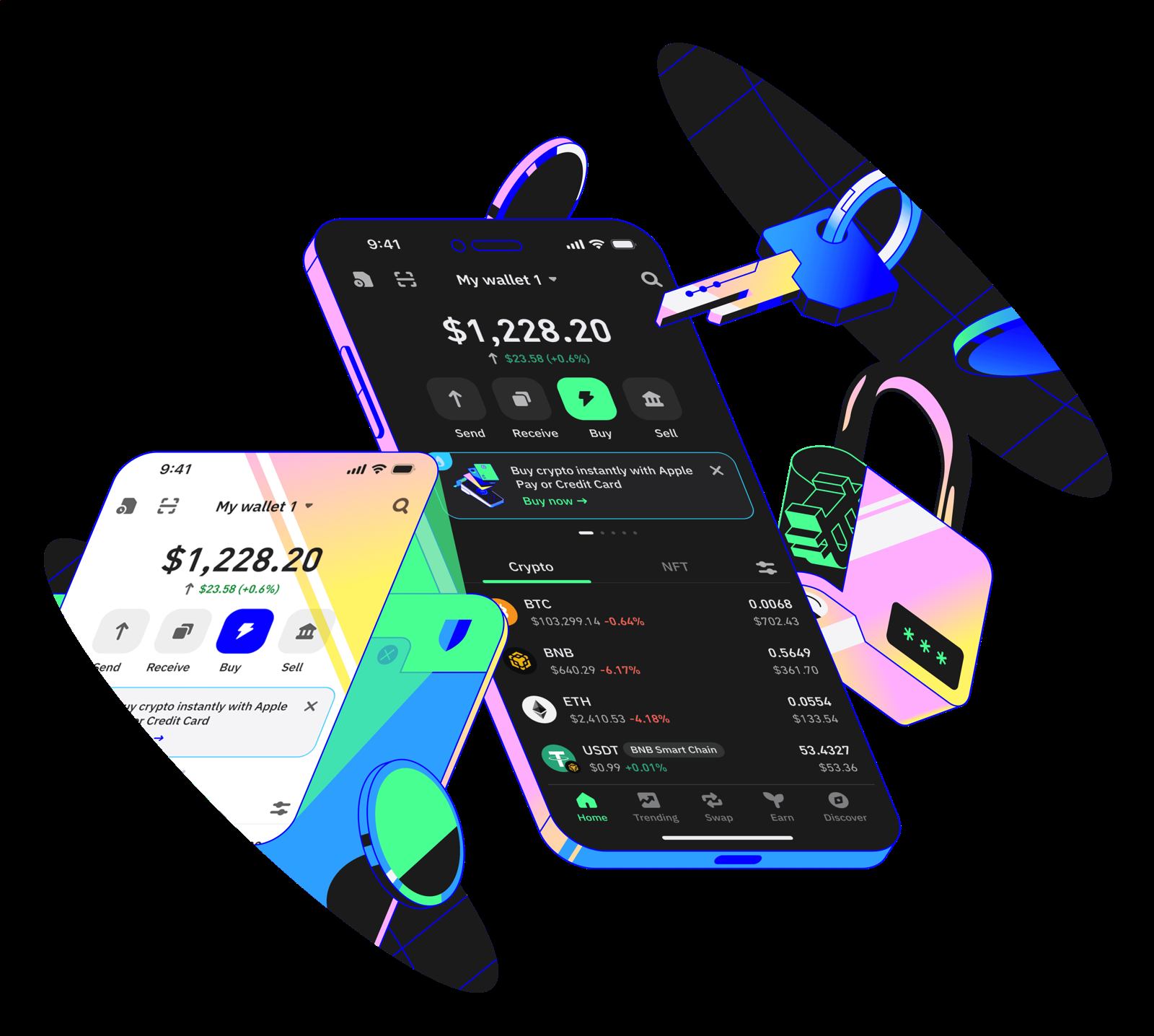
Trust Wallet includes access points for buying crypto, swapping assets, staking supported coins, viewing NFTs, checking market prices, and using Web3 applications. These features reduce the need to jump between many tools, but every route still touches external networks or providers. A card purchase, a decentralized swap, and a staking delegation all have different fees, settlement timing, and failure modes.
When funding a wallet for gas, match the chain to the action. BNB Smart Chain needs BNB for gas, Ethereum needs ETH, Tron needs TRX, and Polygon uses POL. Failed migration or swap attempts often come from missing the native gas token, not from the wallet interface itself. Keeping a small gas reserve on the networks you use prevents simple tasks from becoming urgent searches for a workaround.
Daily habits that strengthen the wallet
Security becomes easier when the same routine is used before every transfer, approval, and dApp connection. The routine should be short enough to follow under pressure and specific enough to catch the mistakes that cost money.
- Write the recovery phrase offline and store it away from cameras and cloud sync.
- Use the official app store listing or extension source before installing or updating.
- Read signature prompts closely, especially messages involving approvals or spending limits.
- Keep separate wallets for long-term holdings, active DeFi use, and testing new dApps.
- Maintain gas tokens for each chain you use regularly.
- Revoke old token allowances after finishing with a contract.
This approach makes Trustwallet security less dependent on memory. The wallet becomes a set of boundaries: one address for routine transactions, one for higher-value storage, and a smaller testing wallet for new contracts, NFT mints, prediction markets, or unfamiliar bridges.
Hardware wallets and separate vault addresses
Long-term holders often separate convenience from storage. A phone wallet is useful for swaps, NFTs, staking checks, and fast payments. A vault address is better suited to assets that do not need constant movement. Some users add a hardware wallet to keep signing keys isolated from the everyday device environment.
The principle is simple: active wallets face more prompts, more sites, and more human decisions. Storage wallets should face fewer of all three. Trustwallet security is strongest when high-value assets are not mixed with experimental Web3 activity, because one bad approval or fake mint should never expose the entire portfolio.

When Trust Wallet is the right security fit
Trust Wallet suits users who want broad chain support, direct control of assets, mobile-first Web3 access, a desktop extension option, NFT visibility, swaps, staking, and SWIFT smart wallet features in one product family. It is especially useful for people who understand that wallet security is a shared operating model between the app, the device, the blockchain, and the person signing each action.
Other wallet setups make sense for different priorities. A hardware-first setup favors cold storage. A chain-specialized wallet gives deeper tooling inside one ecosystem, such as Solana or Ethereum. A centralized exchange account emphasizes account recovery and familiar login flows. Trustwallet security belongs to the self-custody path: direct ownership, wide Web3 access, and disciplined handling of keys, approvals, gas, and signatures.
Things people ask about Trustwallet security
Which Trust Wallet settings help protect the app on a phone?
Use a strong device passcode, enable biometric unlock where appropriate, and keep the operating system updated. Inside the wallet, turn on available app-lock protections and avoid leaving the wallet open on a shared device. These settings protect local access, but they do not replace the recovery phrase backup. The phrase remains the master route back into the wallet.
Gas fees on Trust Wallet: why does a token transfer fail with funds visible?
A transfer fails when the wallet lacks the native gas token for the selected network. USDT on BNB Smart Chain still needs BNB for gas, Ethereum tokens need ETH, Tron tokens need TRX, and Polygon transactions need POL. The token balance and the gas balance are separate. Keeping a small native balance on each used chain prevents many failed sends.
Can Trust Wallet recover crypto sent to the wrong address or network?
Blockchain transactions settle to the address and network chosen by the sender. Trust Wallet cannot reverse a confirmed transfer. Recovery depends on who controls the receiving address and whether the asset exists on the selected chain. Before large transfers, confirm the network, compare address characters, and use a small test transaction when sending to a new destination.
Is SWIFT smart wallet safer than a standard Trust Wallet account?
SWIFT changes the wallet model by using smart contract wallet features and account abstraction, which improves parts of the signing and transaction experience. It does not remove the need to read prompts, protect access credentials, and avoid malicious dApps. The safer choice depends on the user's workflow: SWIFT emphasizes smoother smart wallet controls, while a standard account keeps the traditional key model.
Recovering access after deleting the Trust Wallet app requires what?
Access recovery requires the wallet's recovery phrase or the credentials tied to the specific smart wallet setup being restored. Deleting the app removes local wallet data from the device, but it does not erase funds from the blockchain. Without the correct backup, the wallet cannot be reconstructed through a support ticket, email address, or phone number.