Honest, useful guides
Trustwallet is a self-custody wallet for Web3 assets
Trustwallet is a self-custody multi-chain wallet for holding crypto, swapping tokens, staking supported assets, managing NFTs, and connecting to Web3 apps from a mobile app or browser extension. Its defining point is ownership: the wallet puts the recovery phrase and private keys under the user's control while providing built-in access to markets, swaps, staking, NFTs, account abstraction through SWIFT, and newer on-chain categories such as RWAs, perps, and prediction markets.
A wallet built around private keys, not platform accounts
The core experience starts with a recovery phrase that unlocks the user's addresses across supported networks. That phrase is the master credential, so access does not depend on a conventional username, password reset, or support ticket. The app signs transactions locally, then broadcasts them to the relevant blockchain when the user approves the action.
This matters because Bitcoin, Ethereum, BNB Smart Chain, Solana, Polygon, and other networks each maintain their own ledgers, fee markets, tokens, and transaction rules. Trustwallet acts as the interface across those ecosystems, showing balances, collectible assets, and transaction prompts in one place while the underlying chains still settle the actual transfers.
How swaps move between tokens inside the app
Swapping is one of the main reasons users choose a full Web3 wallet instead of a simple storage app. A swap begins with a source asset, a destination asset, a network, and an amount. The wallet presents the route and estimated output before the transaction is signed. Network fees still belong to the chain being used, so ETH pays gas on Ethereum, BNB pays gas on BNB Smart Chain, SOL pays fees on Solana, and POL pays gas on Polygon.
Token approvals deserve attention when using Ethereum-style smart contracts. Approving a token gives a contract permission to spend a defined amount from the wallet. Smaller approvals reduce exposure when experimenting with unfamiliar dApps, while revoking old approvals keeps the address cleaner over time. Trustwallet surfaces the signing step, but the user's approval is what authorizes the contract call.
Staking turns supported assets into network participation
Staking in the wallet connects eligible coins to proof-of-stake networks where validators help secure the chain. The experience varies by asset: some networks use bonding and unbonding periods, some pay rewards on a cycle, and some require a minimum amount before delegation makes sense after fees. The wallet interface brings those actions into the same place as balances and transaction history.
Assets such as BNB, SOL, ATOM, and other supported staking coins fit this workflow because they already rely on validators. Rewards come from the network's design, not from a fixed bank-style rate. Before staking, users should look at the validator, lockup rules, fee token, and unstaking delay because those details decide when funds become liquid again.
NFTs, RWAs, and collectibles in the same portfolio view
NFT support gives the wallet a place to display collectibles alongside coins and tokens. An NFT is a token with a unique identifier, commonly used for art, memberships, gaming items, tickets, or on-chain credentials. The wallet view helps users inspect ownership, send items, and connect to marketplaces or dApps that read the address.
The same self-custody model extends to tokenized real-world assets, sometimes called RWAs. These assets represent off-chain value through on-chain tokens, so the wallet handles the token while the issuer and asset structure determine the real-world claim behind it. Trustwallet groups this category into its broader Web3 experience rather than treating it as a separate account product.
SWIFT smart accounts make Web3 actions less brittle
SWIFT is the wallet's smart contract wallet experience, built around account abstraction. Standard crypto wallets rely on externally owned accounts controlled directly by private keys. A smart account uses contract logic to improve how transactions are authorized, bundled, or recovered, while still fitting into on-chain execution.
That design supports smoother Web3 actions because the account itself gains programmable behavior. Users still need to understand what they are signing, yet smart accounts reduce some rough edges that make crypto feel technical: gas handling, transaction steps, and app interactions become easier to package into a clearer flow. Trustwallet uses SWIFT as a bridge between ordinary wallet use and more flexible account design.
Buying crypto and checking prices before a move
The app includes a buy flow for users who want to add crypto without leaving the wallet interface. Payment methods, supported regions, limits, and provider availability vary by location, but the workflow is simple: choose the asset, enter an amount, review the provider quote, and complete the purchase through the payment partner.
Market data and the currency converter serve a different purpose. They help users compare token prices, portfolio movement, and rough fiat values before sending, swapping, or staking. Those tools do not change the blockchain transaction; they make the decision screen easier to read before funds move on-chain.
Mobile app and browser extension workflows
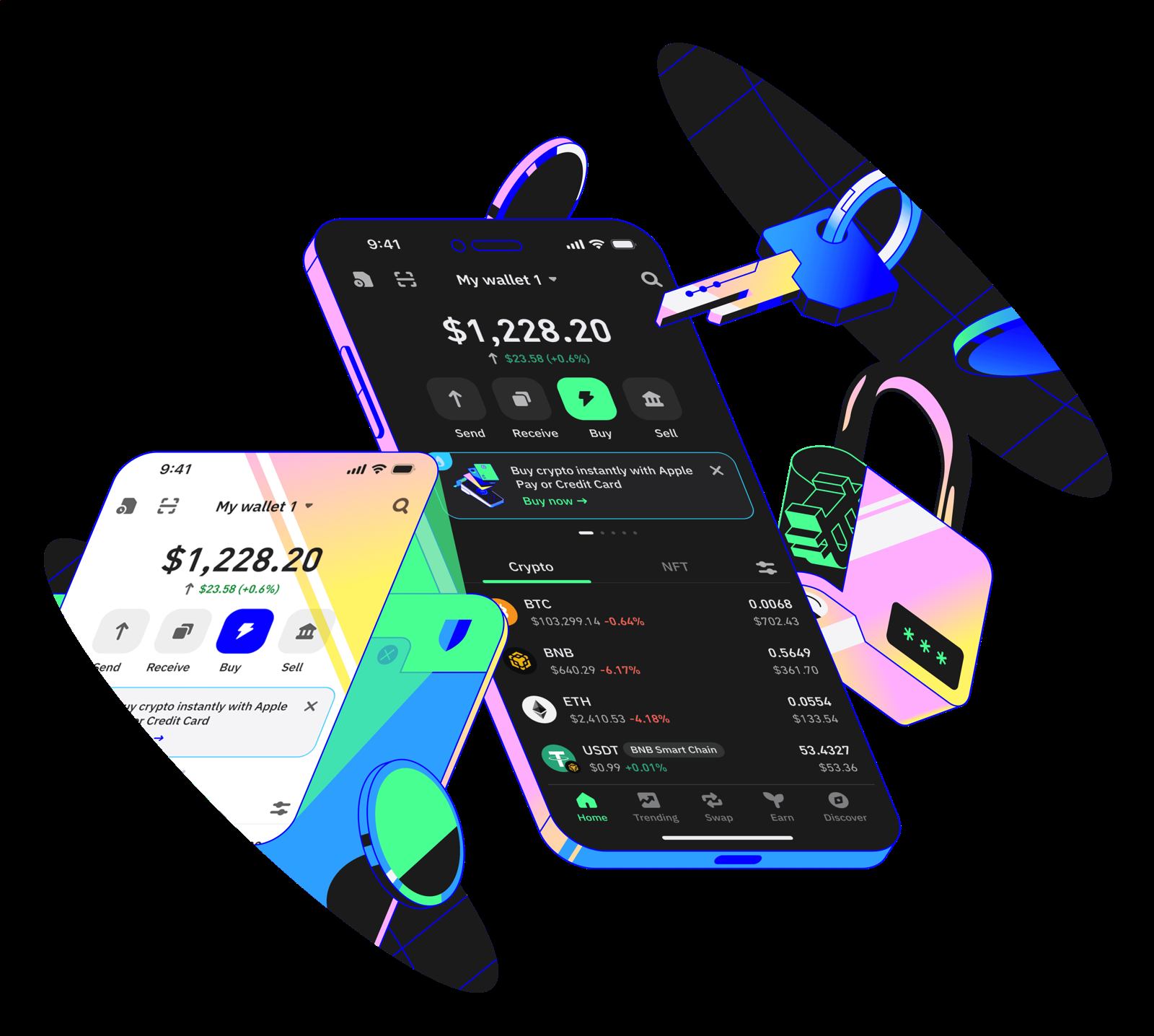
The mobile app is the natural starting point for people who manage crypto from an iPhone or Android device. It keeps balances, swaps, staking, NFTs, and dApp access in a pocket-sized interface. The browser extension gives desktop users a more comfortable Web3 connection when using DeFi dashboards, marketplaces, analytics sites, or developer tools.
A sensible first setup follows a short sequence:
- Create or import a wallet and write down the recovery phrase offline.
- Add the networks and assets that match the funds being used.
- Send a small test transfer before moving a larger balance.
- Keep each chain's gas token available for future transactions.
- Review contract prompts before approving swaps, staking, or NFT actions.
Where DeFi, perps, and prediction markets fit
DeFi access is where a multi-chain wallet becomes more than storage. The wallet connects to decentralized exchanges, lending markets, liquid staking apps, NFT platforms, and portfolio tools through signed transactions. Each dApp supplies its own contracts and rules, while the wallet supplies the address, signing prompt, and asset view.
Trustwallet also highlights newer trading categories such as perpetual futures and prediction markets, including venues tied to Polymarket, Predict.fun, and Hyperliquid. Perpetual futures introduce leverage, liquidation prices, and funding payments; prediction markets price event outcomes through tradable positions. These are advanced on-chain activities, so the contract screen and risk controls matter more than the convenience of the entry point.
Security habits that matter with self-custody
Self-custody gives the user direct authority over assets, and that authority makes basic security habits decisive. The recovery phrase should stay offline, private, and separate from screenshots, cloud notes, email drafts, and chat apps. Anyone who obtains it controls the wallet. A hardware wallet, where supported, adds another approval layer for larger balances.
Transaction review is the other major habit. Wallet prompts should match the action the user intended: token, network, destination address, approval amount, and site domain. Trustwallet makes the prompt visible, but signature quality depends on reading the request before confirming it.

MetaMask, Phantom, and Coinbase Wallet as alternatives
Several established wallets overlap with this category, but they differ in emphasis. MetaMask is deeply associated with Ethereum and EVM chains and remains common across DeFi. Phantom began with Solana and expanded into a broader multi-chain wallet with a polished NFT experience. Coinbase Wallet is a self-custody product connected to a major exchange brand and works well for users who already move between exchange accounts and Web3 addresses.
In most cases, Trustwallet stands out as a broad mobile-first self-custody wallet with a large asset range, a browser extension, built-in swaps, staking, NFT support, and smart account features through SWIFT. The best choice comes down to chains used, dApp habits, preferred device, and how much account abstraction or exchange-adjacent convenience the user wants.
Trustwallet: questions and answers
What fees do users pay when sending crypto from Trustwallet?
Users pay the network fee charged by the blockchain that processes the transaction. Ethereum transfers use ETH for gas, BNB Smart Chain uses BNB, Solana uses SOL, and Polygon uses POL. The wallet shows the estimated fee before signing. Swap quotes also include price impact and route details, so the final cost combines the chain fee with the trading outcome shown on the confirmation screen.
Can I recover my wallet if I lose my phone?
Yes, recovery works when the user still has the correct recovery phrase. Installing the app on a new device and importing the phrase restores access to the addresses derived from it. Without that phrase or another configured recovery method for a smart account, the assets remain on-chain but the user loses the practical ability to sign transactions from those addresses.
Does Trustwallet support Bitcoin and Ethereum in one wallet?
Yes. It is designed as a multi-chain wallet, so users manage assets from different networks inside one app experience. Bitcoin and Ethereum follow different transaction models, address formats, and fee rules, but the wallet presents them through a unified portfolio view. The user still needs the correct receiving address and network for each transfer.
Which gas token should I keep for swaps and NFT transfers?
Keep the native gas token for the network where the asset lives. ETH is needed on Ethereum, BNB on BNB Smart Chain, SOL on Solana, and POL on Polygon. A wallet can show a token balance that cannot move until the address also has enough of the network's gas asset to pay for the transaction.
Is the browser extension different from the mobile app?
The browser extension is built for desktop Web3 sessions, while the mobile app is built for phone-based portfolio management and dApp access. Both serve the same self-custody purpose, but the extension is more convenient for dashboards, marketplaces, and DeFi sites opened in a desktop browser. The mobile app is better suited to quick balance checks, receiving funds, and everyday wallet actions.
Do I need KYC to create a self-custody wallet?
Creating or importing a self-custody wallet does not require an identity check because the wallet generates keys locally and interacts with public blockchains. Buying crypto through integrated payment providers is different; those partners set their own region, payment, and identity requirements. The wallet address itself remains separate from the onboarding rules of any fiat purchase provider.
What happens if I send tokens on the wrong network?
The outcome depends on the networks and address format involved. Some EVM networks share address formats, so the funds may sit at the same address on another chain and require the correct network view to access. Other mistakes are harder to recover. Before sending, match the asset, chain, and receiving address exactly, then use a small test transfer for unfamiliar routes.